
Palm Tree Wrapping
What is Palm Tree Wrapping?
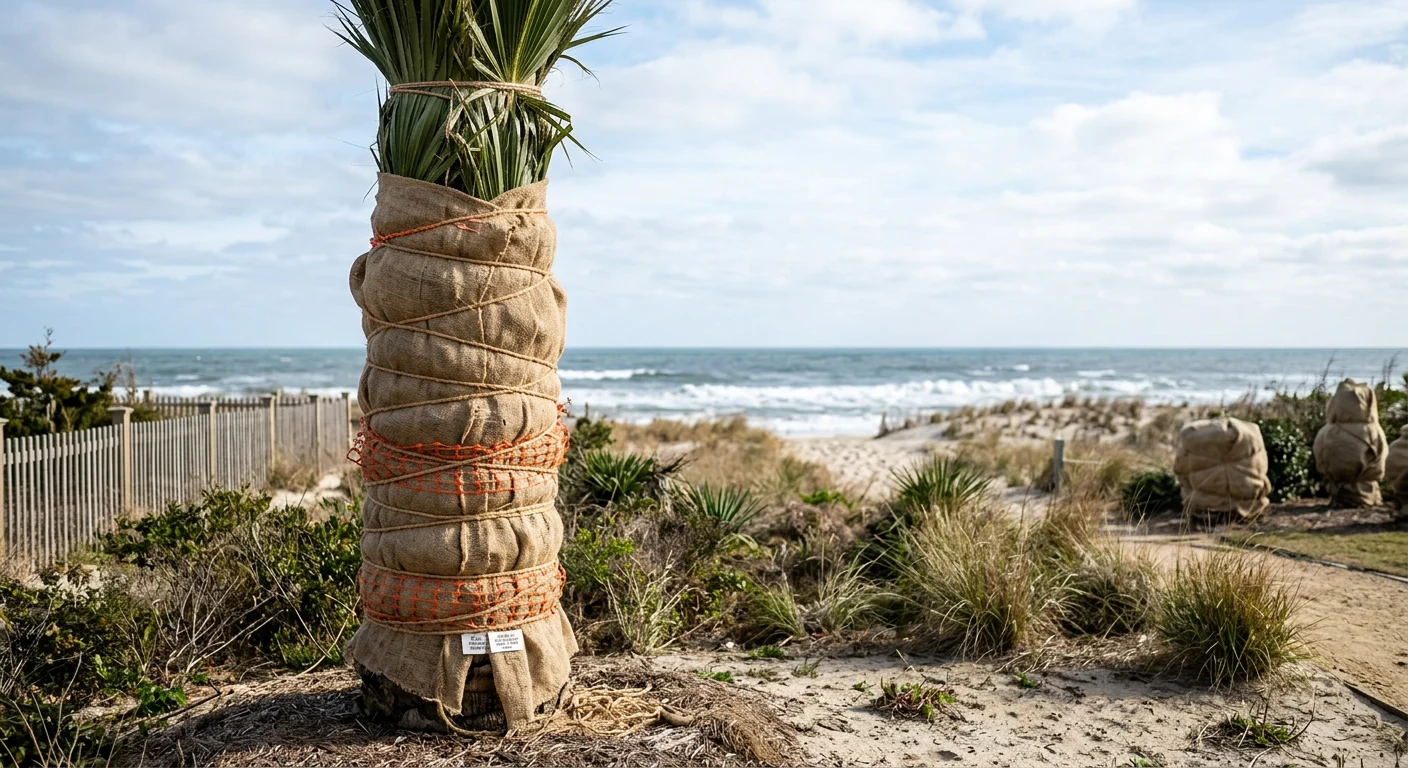
Palm tree wrapping is a protective measure for your beloved palm trees, especially when the weather turns harsh. It involves carefully covering the trunk and the crown, which is the leafy top part, with specialized materials. Think of it like giving your palm trees a cozy, insulated blanket for the winter. The most common materials used are burlap, a sturdy natural fabric, or frost cloth, which is a lighter, breathable fabric designed to block frost and cold. Sometimes, burlap is combined with heat tape, which is wrapped around the trunk and then covered with burlap for added warmth. This practice is crucial for insulating the tree, preventing its vital moisture from escaping into the dry air, and shielding it from damaging winds. For newly transplanted palms, this wrapping can significantly reduce transplant shock, helping them establish a stronger root system and adapt more easily to their new environment. It’s a simple yet effective way to ensure your tropical beauties survive and thrive, even in climates that experience occasional freezes or strong winds. We understand the unique needs of palm trees at AZ Palm Tree Lights, and while our primary focus is on illuminating them, we also recognize the importance of their health and survival, which is where services like palm tree wrapping become essential for many of our clients in areas with fluctuating temperatures. Protecting your investment in beautiful landscaping is key to enjoying it year-round.
Why Wrap Your Palm Trees?
Wrapping your palm trees serves several critical functions, primarily centered around protection from environmental stressors. The most significant benefit is shielding them from freezing temperatures and frost. Many palm species, while visually stunning, are not naturally equipped to handle sub-zero conditions. The wrapping acts as an insulator, creating a microclimate around the trunk and crown that can be several degrees warmer than the ambient air. This is vital for preventing damage to the inner tissues and growing points of the palm, which can lead to the death of the tree if severely frozen. Beyond just cold, strong winds can also wreak havoc on palm trees, especially their fronds. Wrapping the foliage can prevent them from tearing or breaking, preserving the tree’s aesthetic appeal and overall health. For young or newly planted palms, the stress of transplanting can make them more vulnerable. Wrapping helps to conserve moisture, which is crucial for root establishment, and reduces water loss from the leaves, allowing the tree to focus its energy on growing new roots rather than battling dehydration. It’s a proactive approach to landscape maintenance that can save you from the heartbreak and expense of losing a valuable palm tree. Consider it an essential part of [our services](https://azpalmtreelights.com/services/) for ensuring the longevity and beauty of your landscape, especially as you prepare for cooler months, which can then be followed by our signature [Palm Tree Lighting](https://azpalmtreeligh.wpexcenginpowered.com/services/palm-tree-lighting/) to truly make them shine.
Ready to Protect Your Palms and Enhance Their Beauty?
At AZ Palm Tree Lights, we understand the importance of healthy trees for stunning illumination. While our specialty is lighting, we recognize the value of protective measures like wrapping for your palm trees’ well-being. Explore how we can help you create a captivating outdoor space year-round.
When Should You Consider Palm Tree Wrapping?
Deciding when to wrap your palm trees depends heavily on your local climate and the specific species of palm you have. Generally, the need for wrapping arises as temperatures begin to consistently drop towards freezing. In regions that experience mild winters with only occasional light frosts, wrapping might only be necessary for more sensitive palm varieties or during unusually cold snaps. For areas with more significant freezes, it’s a good idea to start wrapping your palms before the first hard freeze is predicted. This typically means late fall or early winter. You should also consider wrapping if you have recently transplanted a palm tree, regardless of the season. The stress of moving can make any tree more susceptible to environmental damage, and wrapping provides that extra layer of support. Additionally, if strong, cold winds are a common occurrence in your area, wrapping can offer valuable protection against windburn and physical damage to the fronds. Monitoring weather forecasts is key; a sudden drop in temperature or a warning for frost can be your cue to get your palms prepared. Even if you’re primarily interested in our stunning [Palm Tree Lighting](https://azpalmtreelights.com/services/palm-tree-lighting/) services to enhance your property’s visual appeal, understanding and implementing protective measures like wrapping ensures your trees remain healthy to showcase that lighting year after year. It’s about nurturing your landscape’s foundation so it can truly shine.
How is Palm Tree Wrapping Done?
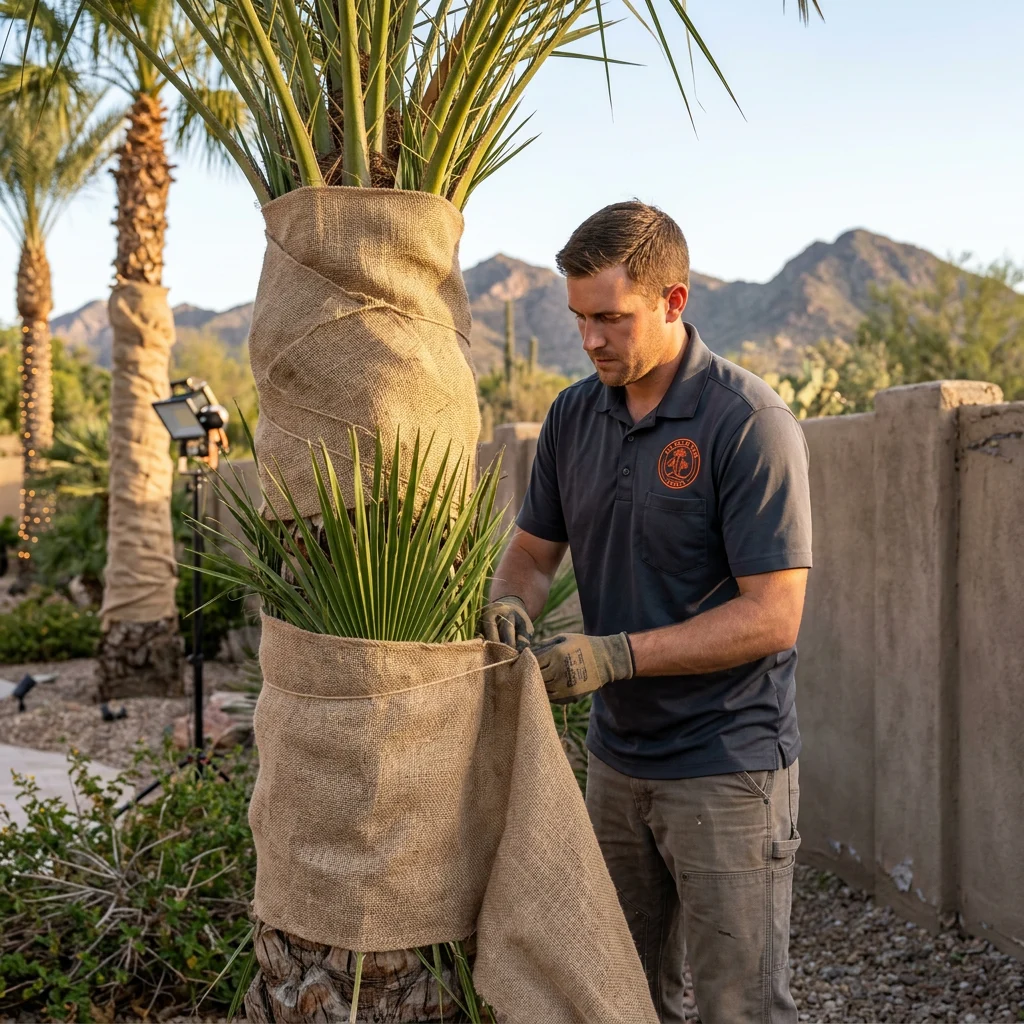
The process of palm tree wrapping is methodical and requires attention to detail to ensure maximum effectiveness. First, the materials are gathered – typically burlap, frost cloth, or a combination with heat tape. For the trunk, burlap is often wrapped directly around it, securing it with twine or tape. If heat tape is used, it’s applied in a spiral pattern around the trunk, ensuring it doesn’t directly touch the bark in a way that could cause damage, and then covered with burlap for insulation and aesthetics. The most crucial part is protecting the crown, which is the spear-like bud at the top of the trunk where new fronds emerge. This area is particularly sensitive to cold. Often, the crown is enclosed in a cone or bag made of burlap or frost cloth, and sometimes a light bulb (specifically a C7 or C9 incandescent bulb, as LEDs don’t generate enough heat) is placed inside to provide gentle warmth. It’s important to ensure good air circulation to prevent mold and rot. The wrapping should be snug enough to provide protection but not so tight that it restricts growth or causes abrasions. After the cold season passes, typically in early spring, the wrapping should be removed promptly to allow the tree to acclimate to warmer temperatures and prevent potential issues like fungal growth or insect infestation. This careful process helps safeguard the tree’s health, ensuring it’s ready to flourish and be beautifully illuminated by our expert [Palm Tree Lighting](https://azpalmtreelights.com/services/palm-tree-lighting/) services, which you can see examples of in our [Gallery](https://azpalmtreelights.com/gallery/).